
- A New Pill Arrives — and Pills Take Off
- The Next Generation: Retatrutide and the Race Past 20%
- New Ways to Pay
- A Tightening Regulatory Picture for Compounding
- What the Science Is Showing
- The Safety Picture as Use Expands
- Frequently Asked Questions
- What is the newest GLP-1 drug?
- Is retatrutide available yet?
- Will Medicare cover GLP-1 drugs for weight loss?
- Are compounded GLP-1 drugs still available?
- Should I wait for a newer, more powerful GLP-1 drug?
- Which GLP-1 drug produces the most weight loss?
- The Bottom Line
Affiliate disclosure: This article contains affiliate links, and allcheminfo.com may earn a commission if you use them, at no extra cost to you. This article is informational, reflects developments as of May 2026, and is not medical advice.
The GLP-1 field does not sit still. For anyone taking one of these medications, or weighing whether to, the landscape of 2026 looks meaningfully different from a year ago — new drugs approved, far more powerful ones on the way, new ways to pay for them, and a regulatory picture that is tightening in places. This roundup pulls the major developments together as they stand in mid-2026. One caveat worth stating up front: this is a fast-moving area, and a snapshot taken today will need refreshing before long.
A New Pill Arrives — and Pills Take Off
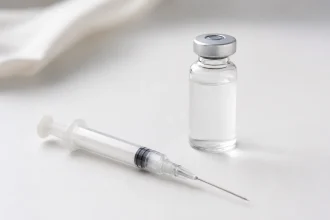
For most of the GLP-1 era, these drugs meant a weekly injection. That is changing fast.
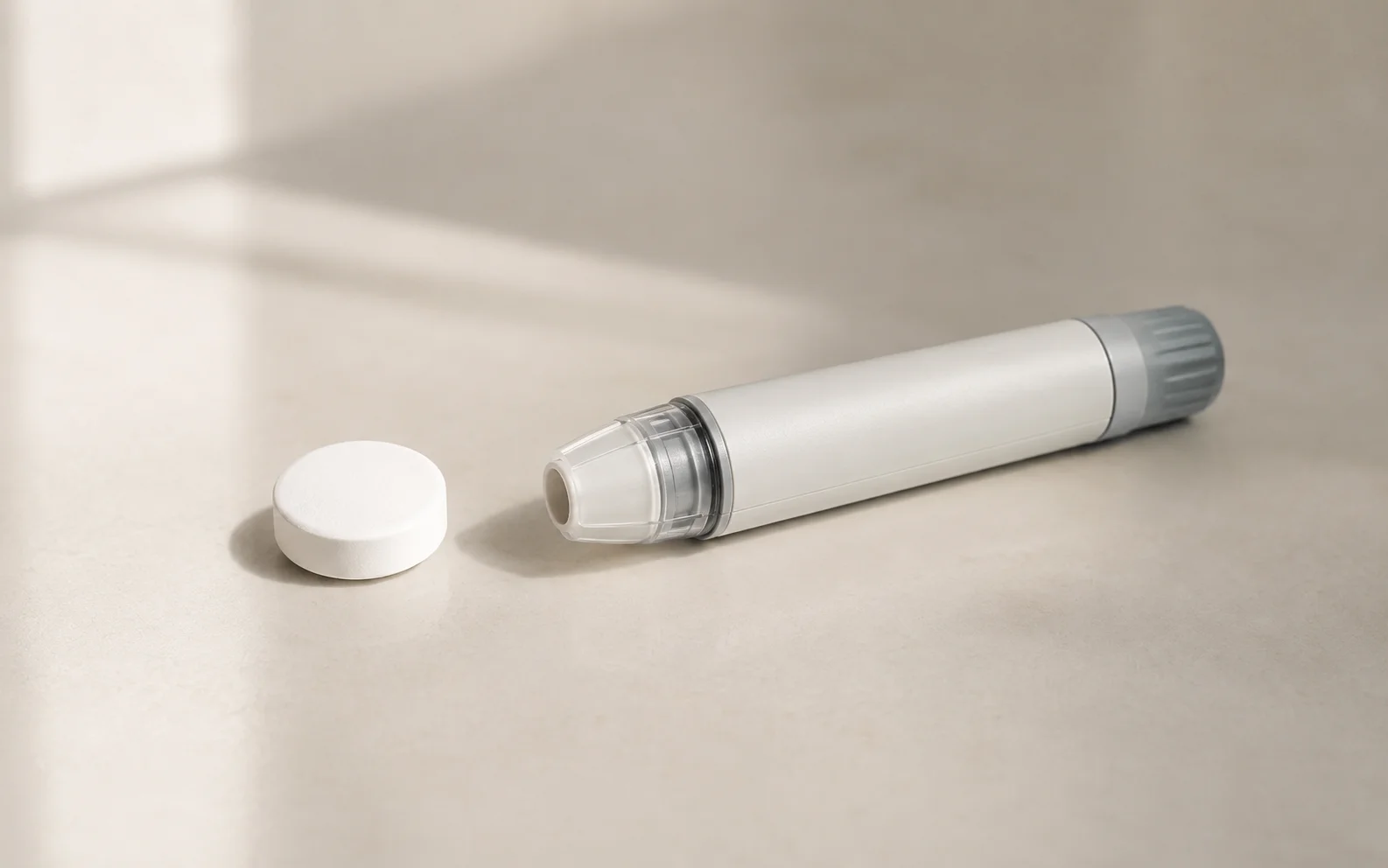
In April 2026 the FDA approved Foundayo (orforglipron), Eli Lilly’s once-daily oral GLP-1 for weight management — and notably the first GLP-1 pill with no food or water timing rules. It joined the oral version of Wegovy, the semaglutide pill, which had arrived shortly before. Our full guide to Foundayo covers that drug in detail.
The uptake has been striking. Within roughly ten weeks of its approval, the Wegovy pill was estimated to be part of the daily routine of around 400,000 Americans, and the oral GLP-1s as a group have been adopted faster than the injectables were. The appeal is straightforward — no needles, easier to start, easier to fit into a life. The pills are generally somewhat less powerful than the top injectables, a trade-off our guide to oral versus injectable GLP-1s examines, but for many people the convenience is decisive. The era of injection-only GLP-1 treatment is over.
The Next Generation: Retatrutide and the Race Past 20%
If the pills are the present, the next generation of injectables is the headline of 2026 — and it is about raw efficacy.
The standout is retatrutide, an experimental Eli Lilly drug. Where semaglutide targets one gut hormone and tirzepatide two, retatrutide targets three — GLP-1, GIP and glucagon — a “triple agonist.” In May 2026, Lilly released Phase 3 results from its TRIUMPH-1 trial, and the numbers were striking: at the highest dose, over 80 weeks, average weight loss came in at roughly 25 to 30% of body weight depending on how it was measured, with about 45% of patients on that dose losing 30% or more. Weight loss of that magnitude had previously been associated mainly with bariatric surgery. Retatrutide is not yet approved — these are trial results — but they reset expectations for what a drug in this class can do.
| Drug | Maker | Mechanism | Trial weight loss | Status |
|---|---|---|---|---|
| Retatrutide | Eli Lilly | Triple agonist (GLP-1 + GIP + glucagon) | ~25–30% (Phase 3, highest dose) | Phase 3 data May 2026; not approved |
| CagriSema | Novo Nordisk | GLP-1 + amylin (cagrilintide + semaglutide) | ~20% (Phase 3) | Phase 3 reported 2025; not yet approved |
| Amycretin | Novo Nordisk | GLP-1 + amylin (pill and injection) | Up to ~24% (earlier studies) | Phase 3 began 2026 |
| Survodutide | Boehringer Ingelheim | GLP-1 + glucagon | ~17% (Phase 3) | Phase 3; not approved |
Retatrutide is not alone. Novo Nordisk’s CagriSema, a semaglutide-and-amylin combination, reported Phase 3 weight loss of around 20% — a solid result, though one that landed below the lofty expectations set for it, and a modest figure beside retatrutide’s, a sign of how quickly the bar has risen. The same company’s amycretin, another GLP-1-and-amylin drug being developed in both pill and injection form, has moved into Phase 3. Boehringer Ingelheim’s survodutide, a GLP-1-and-glucagon drug, has reported Phase 3 weight loss around 17% and is also being studied for liver disease. Researchers describe a clear pattern: each additional hormone pathway a drug engages tends to add efficacy. Drugs requiring only monthly dosing are in development too. The pipeline is deep — though every one of these remains investigational, and trial results do not always translate fully into real-world use.
New Ways to Pay
Cost has always been the GLP-1 sticking point, and 2026 brought movement on it.
The most concrete development is the Medicare GLP-1 Bridge, a pilot program from the Centers for Medicare & Medicaid Services running from July 1, 2026, through the end of 2027. It offers Medicare Part D enrollees coverage for several weight-loss GLP-1s — the Wegovy pill and injection, a Zepbound formulation, and the Foundayo pill — for a modest copay, with eligibility based on body weight and health conditions. It is explicitly a “bridge” — a temporary measure ahead of a possible longer-term coverage program.
Separately, pricing deals struck between the drugmakers and the federal government have pushed cash prices for some GLP-1 products to new lows, though insurance coverage for obesity treatment remains uneven. Our guides to GLP-1 costs and to savings programs cover the current options in detail. The headline is that the cost picture, long a flat wall, is finally showing some cracks.

💊 Looking for a Lower-Cost Compounded Option?
For cash-pay patients, compounded semaglutide is a lower-cost compounded option through a clinician-supervised telehealth model. Direct Meds offers Summer 2026 promotional pricing:
- Compounded Semaglutide: $147 first month ($150 OFF regular $297)
- Clinician-supervised dosing and titration support
- 503B compounding pharmacy network — patient-specific prescriptions
- LegitScript-certified telemedicine compliance
- USP <795> and USP <797> sterile compounding standards
- Available in 48 states (excludes MS and LA)
Compounded semaglutide contains semaglutide, but the compounded product itself is not an FDA-approved finished product and is not reviewed by the FDA for safety, effectiveness or quality. Whether it is appropriate for you is a decision for you and your clinician.
A Tightening Regulatory Picture for Compounding
While approved drugs have multiplied, the compounded-GLP-1 market has moved the other way.
Compounded semaglutide and tirzepatide expanded enormously during the drug shortages of 2022 to 2024. Those shortages are now resolved, and in April 2026 the FDA proposed excluding semaglutide, tirzepatide and liraglutide from the 503B Bulks List — a step that, if finalized, would close the last pathway for large-scale outsourcing-facility compounding of these drugs. Our detailed guide to the FDA’s 503B proposal explains what that means.
The direction is clear: the regulatory environment for compounded GLP-1s is tightening. Patient-specific compounding through 503A pharmacies remains a separate, narrower pathway, but the era of industrial-scale compounded supply, born of the shortages, is winding down. Anyone relying on a compounded product is well advised to follow how this settles.
What the Science Is Showing
Beyond the drugs themselves, GLP-1 research continues to surprise.
One recent NIH-funded study traced how the newer small-molecule oral GLP-1 drugs act in the brain, finding that they reach a deep reward circuit and dampen “hedonic” eating — eating for pleasure rather than hunger. That is a different mechanism from the appetite suppression long attributed to the older injectable drugs, and it hints at why these medications are being investigated for conditions beyond weight, including substance use disorders.
More broadly, the research direction is toward drugs that engage multiple hormone systems at once, and toward better tolerability alongside greater efficacy. The FDA has also continued to approve new uses for GLP-1 drugs over time — in cardiovascular disease, kidney disease and obstructive sleep apnea among them. The science underlying this drug class is still expanding, and the obesity-treatment field of 2028 will likely look different again.
The Safety Picture as Use Expands
With tens of millions of people now taking GLP-1 drugs — by some surveys, more than one in eight US adults — the real-world safety record of this drug class has been accumulating quickly, and that record is itself a 2026 story.
The broad picture has been reassuring. Large studies and the accumulated experience of widespread use have not overturned the favorable risk-benefit balance these drugs were approved on. But scrutiny has also sharpened, and a few threads are worth knowing. Gastrointestinal side effects, such as nausea, remain the most common problem and the most frequent reason people stop treatment. Loss of lean muscle alongside fat has drawn growing attention, with more emphasis now on protein intake and resistance exercise during treatment. And regulators continue to monitor rarer potential signals, including a possible link to a rare eye condition, where investigation is ongoing and a causal connection is not established.
None of this changes the basic assessment of these drugs as effective and, for appropriate patients, broadly safe. It reflects something normal: as a drug class moves from trials into the lives of tens of millions, the safety understanding deepens. Our guide to GLP-1 long-term safety covers this evolving picture in detail.
Frequently Asked Questions
What is the newest GLP-1 drug?
As of mid-2026, the most recent FDA approval is Foundayo, the orforglipron pill, approved in April 2026 for weight management. More powerful drugs, such as retatrutide, are in late-stage trials but are not yet approved.
Is retatrutide available yet?
No. Retatrutide, Eli Lilly’s triple-agonist drug, released Phase 3 trial results in May 2026 showing weight loss of roughly 25 to 30% at the highest dose, but it is still investigational and not FDA-approved.
Will Medicare cover GLP-1 drugs for weight loss?
A pilot program, the Medicare GLP-1 Bridge, begins July 1, 2026, offering Part D enrollees coverage for certain weight-loss GLP-1s with a modest copay, based on weight and health criteria. It runs through 2027 as a temporary measure ahead of a possible longer-term program.
Are compounded GLP-1 drugs still available?
Compounding through 503A pharmacies, on a patient-specific basis, remains a legal pathway, but the large-scale compounding market is contracting. In April 2026 the FDA proposed closing the remaining route for 503B outsourcing facilities to compound these drugs from bulk.
Should I wait for a newer, more powerful GLP-1 drug?
That is a question for you and your clinician. More powerful drugs are coming, but they are not approved yet, and the drugs available now produce substantial, well-studied results. Delaying effective treatment to wait for something not yet available is rarely the right call on its own.
Which GLP-1 drug produces the most weight loss?
Among FDA-approved drugs, tirzepatide (Mounjaro and Zepbound) generally produces the most, with around 20% average weight loss at higher doses in trials, somewhat ahead of semaglutide. In trials of investigational drugs, retatrutide has gone further — roughly 25 to 30% at its highest dose — but it is not yet approved. The most effective drug for a given person, though, depends on their health, tolerance and response, not on trial averages alone.
The Bottom Line
The GLP-1 story in 2026 is one of rapid expansion in almost every direction. There is a new pill, and pills are being adopted fast. There is a next generation of far more powerful injectables, led by retatrutide, moving through late-stage trials. There are new, if still partial, ways to pay — a Medicare pilot, lower cash prices. And there is a tightening regulatory line around compounding. The field is broadening and changing at a genuinely unusual pace.
For someone taking or considering a GLP-1, two things are worth holding onto amid the noise. The first is that newer and more powerful does not automatically mean better for you. The right drug depends on your health, your goals and your tolerance, and the well-established options available today work well for most people — waiting indefinitely for the next headline is rarely wise. The second is that the landscape will keep moving. The sensible approach is not to chase every development, but to make decisions with a clinician who knows your situation, and to revisit them as the picture continues to change. That, for now, is where GLP-1 treatment stands.
Considering a Compounded Option?
For cash-pay patients pursuing semaglutide, Direct Meds offers compounded semaglutide through a clinician-supervised telehealth model, with Summer 2026 promotional pricing:
- $150 OFF first month compounded semaglutide injection ($147 vs regular $297)
- Licensed clinician reviews eligibility and oversees dosing and titration
- 503B compounding pharmacy network — patient-specific prescriptions
- LegitScript-certified telemedicine compliance
- USP <795> and USP <797> sterile compounding standards
- Telemed evaluation included (typically $99 value), 1-2 day FedEx/UPS shipping
- Available in 48 states (excludes MS and LA)
180,000+ patients have used Direct Meds; current Trustpilot rating 4.8. Compounded semaglutide contains semaglutide, but the compounded product itself is not an FDA-approved finished product and is not reviewed by the FDA for safety, effectiveness or quality. Whether it is appropriate for you is a decision for you and your clinician.
Affiliate disclosure: allcheminfo.com receives commission when readers start treatment through Direct Meds. Recommendation based on their 503B pharmacy partnership, LegitScript certification, and clinician-supervised model — not commission rate.
This article is general information, not medical advice. It reflects developments reported as of May 2026 in a fast-moving field; check current sources for the latest status. Decisions about GLP-1 treatment should be made with a qualified healthcare provider.