- Why People Switch — Both Directions
- The Reassuring Part — It’s the Same Drug
- The Catch — Your Dose Does Not Carry Over
- Timing the Switch
- Before You Switch — a Practical Checklist
- Frequently Asked Questions
- Is switching between compounded and brand semaglutide safe?
- Do I have to restart at 0.25 mg when switching to Wegovy?
- Can I match my compounded dose to a brand dose myself?
- How long should I wait between my last compounded dose and my first brand dose?
- Will I notice a difference after switching?
- The Bottom Line
Affiliate disclosure: This article contains affiliate links. We may earn commission when you purchase through partner links, at no extra cost to you. Editorial independence preserved — recommendations based on provider compliance and patient outcomes, not commission rates. This article is informational and is not medical advice.
Switching between compounded semaglutide and brand-name Ozempic or Wegovy has become a common move in 2026. Some people are leaving compounded medication behind as access tightens and the regulatory picture shifts; others are moving toward compounded to manage cost. Either direction raises the same worry: am I about to disrupt something that is working? The reassuring answer is that you are not changing drugs — compounded and brand semaglutide are the same active molecule, and a switch between them is usually smooth. The one thing that genuinely needs care is the dose. Brand and compounded semaglutide are measured and packaged in completely different ways, and your dose does not transfer from one to the other automatically. This guide explains how to make the switch — in either direction — without losing ground.
Why People Switch — Both Directions
Switches happen both ways, for different reasons.
Moving from compounded to brand is increasingly common. The FDA declared the semaglutide shortage resolved in early 2025, and the broad allowance for compounding that the shortage created has been narrowing since; some patients are also switching because their insurance now covers the brand, or simply because they would rather be on the FDA-approved product. For many, the practical trigger is that their compounded supply is ending.
Moving from brand to compounded is usually about cost, particularly for people without insurance coverage for weight-loss medication. It is worth knowing that this gap has narrowed: brand semaglutide is no longer only available at four-figure monthly prices, with manufacturer self-pay programs now offering entry pricing in the low hundreds of dollars. Compounded medication can still be cheaper, but the comparison is closer than it once was — and worth running honestly before you switch.
The Reassuring Part — It’s the Same Drug
Compounded semaglutide and the semaglutide in Ozempic and Wegovy are the same active ingredient. When you switch, your body is not being introduced to a new medication — it is continuing on the one it already knows. Pharmacologically, the switch is barely a switch at all.
This is why, when the dose is matched well, most people notice little or no difference through the transition — appetite suppression, side effects and results tend to carry on much as before. The molecule does the same thing regardless of whether it came from a compounding pharmacy’s vial or a brand-name pen. That is the foundation that makes switching feasible. The complications are not about the drug; they are about how the dose is measured.
The Catch — Your Dose Does Not Carry Over
This is the part to get right, because it is where switches go wrong.
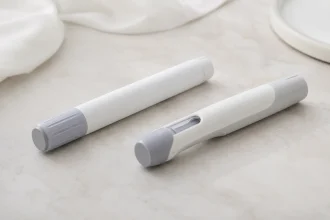
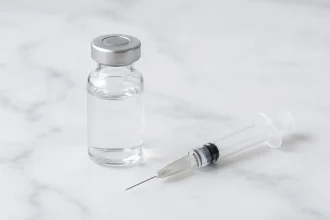
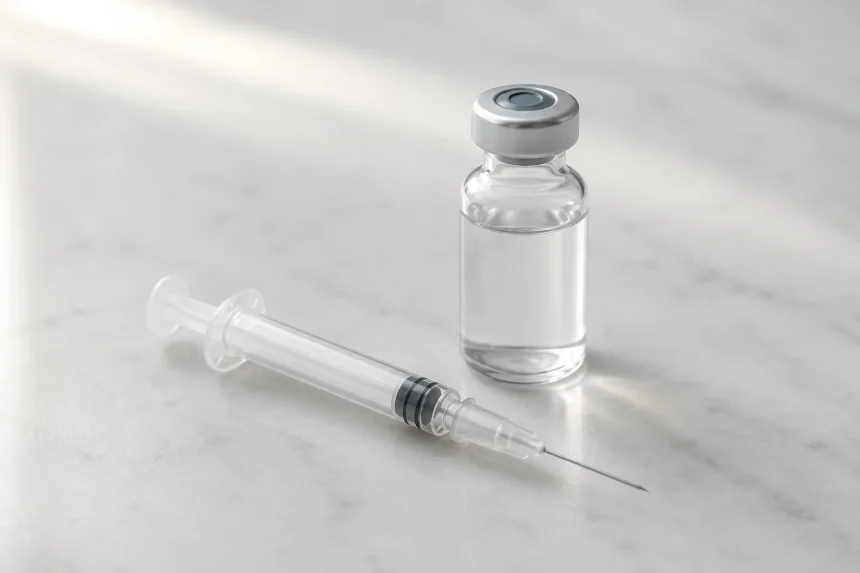
Brand semaglutide is dosed in fixed milligram steps delivered by a pen. Wegovy moves through a set schedule — 0.25, 0.5, 1.0, 1.7 and 2.4 mg; Ozempic through 0.25, 0.5, 1.0 and 2.0 mg. You cannot dose between those steps. Compounded semaglutide works differently: it comes in vials at concentrations that are not standardized, drawn into a syringe and measured by volume, often in “units” — and because it is drawn by hand, it is frequently prescribed at in-between amounts a pen cannot deliver, such as 0.3 or 0.75 mg.
Two consequences follow. First, there is no official conversion chart between compounded and brand semaglutide, because compounded products are not standardized — one pharmacy’s concentration is not another’s. Second, the dose you have been taking may not land on a brand pen’s fixed step at all. A prescriber does not simply copy your number across; they make a clinical judgment from your history — what dose you were on, how long you took it, and how you responded — and choose the brand step that fits. For more on how the brand schedules are structured, see our GLP-1 dosing charts guide.
Going the other way — from a brand pen to a compounded vial — has its own version of the same problem. Compounded medication is not confined to fixed steps, so a pharmacy can in principle match your brand dose in milligrams fairly precisely. But that milligram figure still has to be translated into a volume on a syringe at that particular pharmacy’s concentration — the pharmacy and prescriber’s job, not a number you carry across. And if you are coming off a pen, drawing a dose from a vial by hand is a genuinely new skill; ask for the correctly sized syringe and clear instructions, and our guide to compounded semaglutide side effects covers what to watch for.
There is good news inside this. If you have been doing well on a stable compounded dose, you usually do not have to restart the brand from 0.25 mg; a prescriber can often start you near your current level of exposure and continue from there, so the full titration does not begin again. But matching the dose is a decision for your prescriber, not a calculation to do yourself. Doing it yourself is exactly how the overdoses behind the FDA’s compounded-semaglutide warnings have happened.
Timing the Switch
Semaglutide is a once-weekly medication with a long half-life, and the timing of a switch follows from that.
The standard approach is straightforward: take your first dose of the new product on the day your next weekly dose would have been due — seven days after your last injection of the old one. No washout period is needed, because it is the same drug; you are simply continuing the weekly rhythm with a different product.
Two cautions. First, never use two semaglutide products in an overlapping way — the brand prescribing information is explicit that semaglutide should not be combined with other semaglutide-containing products or other GLP-1 medications. One product at a time. Second, if there has been a longer gap — more than about two weeks since your last dose — tell your prescriber, because they may treat you closer to a fresh start and begin at a lower dose to limit side effects. To avoid an unplanned gap, arrange the new prescription before the old supply runs out.
Before You Switch — a Practical Checklist
A switch is mostly logistics, and a little preparation makes it smooth.
- Talk to a prescriber first. A switch needs a new prescription either way, and you should not change on your own. If you are moving to a different provider — from a telehealth compounding service to an in-person prescriber, or the reverse — give them your full treatment history.
- Bring the specifics. Your current weekly dose in milligrams, the date of your last injection, and a photo of your compounded vial or its label all help a prescriber map the dose accurately.
- Check insurance and cost before filling. Coverage differs between compounded and brand, and between Ozempic and Wegovy. Get the actual price in writing so there are no surprises.
- If you are switching to compounded, verify the pharmacy. Compounded quality depends entirely on the pharmacy preparing it. Our guide on how to verify a compounding pharmacy walks through the checks.
- Mind the supply gap. Line up the new medication before the old one runs out, so the seven-day timing is not disrupted.
💊 Looking for a Lower-Cost Compounded Option?
For cash-pay patients, compounded semaglutide is a lower-cost compounded option through a clinician-supervised telehealth model. Direct Meds offers Summer 2026 promotional pricing:
- Compounded Semaglutide: $147 first month ($150 OFF regular $297)
- Clinician-supervised dosing and titration support
- 503B compounding pharmacy network — patient-specific prescriptions
- LegitScript-certified telemedicine compliance
- USP <795> and USP <797> sterile compounding standards
- Available in 48 states (excludes MS and LA)
Compounded semaglutide contains semaglutide, but the compounded product itself is not an FDA-approved finished product and is not reviewed by the FDA for safety, effectiveness or quality. Whether it is appropriate for you is a decision for you and your clinician.
Frequently Asked Questions
Is switching between compounded and brand semaglutide safe?
Yes — because it is the same active drug, a switch is not pharmacologically risky in itself, and both directions are done routinely. The care lies in matching the dose correctly and timing the changeover, which is why it should always be done with a prescriber rather than on your own. The drug is not the risk; an unmanaged dose is.
Do I have to restart at 0.25 mg when switching to Wegovy?
Usually not. If you have been stable on a steady compounded dose, a prescriber can generally start you near your current level of exposure rather than from the bottom of the ladder, so the full titration does not begin again. One exception: if there has been a gap of more than about two weeks since your last dose, your prescriber may choose to begin lower.
Can I match my compounded dose to a brand dose myself?
No. There is no official conversion chart, because compounded products are not standardized — concentrations differ between pharmacies — and brand pens only deliver fixed dose steps. Matching the dose is a clinical judgment based on your history and response. Doing the math yourself is one of the known routes to accidental overdose.
How long should I wait between my last compounded dose and my first brand dose?
Seven days — the same interval you already wait between weekly injections. No washout period is needed, since it is the same drug; you are simply continuing the weekly schedule with a different product. The one rule: never overlap two semaglutide products, so do not take the new one early.
Will I notice a difference after switching?
At a well-matched dose, most people notice little or nothing — appetite control and side effects tend to carry on as before. If the switch involves a dose change, such as a step up because your compounded dose did not map exactly, you may get the usual dose-increase effects like temporary nausea. That tends to settle as your body adjusts.
The Bottom Line
Switching between compounded and brand-name semaglutide is not switching drugs. It is the same molecule, and with the dose matched well the transition is usually smooth and barely noticeable. What makes a switch go badly is not the medication — it is a dose handled carelessly. Brand and compounded semaglutide are measured in different systems, there is no conversion chart between them, and compounded concentrations vary from pharmacy to pharmacy, so the dose has to be re-mapped by a prescriber from your history rather than copied across by you.
Add the simple timing rule — pick up the weekly rhythm seven days after your last dose, one product at a time — handle the prescription and insurance logistics in advance, and verify the pharmacy if you are heading toward the compounded route. Get the dose right, and the rest is mostly paperwork.
Considering a Compounded Option?
For cash-pay patients pursuing semaglutide, Direct Meds offers compounded semaglutide through a clinician-supervised telehealth model, with Summer 2026 promotional pricing:
- $150 OFF first month compounded semaglutide injection ($147 vs regular $297)
- Licensed clinician reviews eligibility and oversees dosing and titration
- 503B compounding pharmacy network — patient-specific prescriptions
- LegitScript-certified telemedicine compliance
- USP <795> and USP <797> sterile compounding standards
- Telemed evaluation included (typically $99 value), 1-2 day FedEx/UPS shipping
- Available in 48 states (excludes MS and LA)
180,000+ patients have used Direct Meds; current Trustpilot rating 4.8. Compounded semaglutide contains semaglutide, but the compounded product itself is not an FDA-approved finished product and is not reviewed by the FDA for safety, effectiveness or quality. Whether it is appropriate for you is a decision for you and your clinician.
Affiliate disclosure: allcheminfo.com receives commission when readers start treatment through Direct Meds. Recommendation based on their 503B pharmacy partnership, LegitScript certification, and clinician-supervised model — not commission rate.
This article is general information, not medical advice. Clinical and regulatory details reflect the situation as of May 2026. Any switch in medication or dose should be made with a licensed prescriber.