- What is Compounded Semaglutide?
- Is Compounded Semaglutide Still Legal in 2026?
- 503A vs 503B Pharmacies — Why It Matters in 2026
- The Hims Exit and Industry Shakeup
- Compounded vs Brand: The Real Differences
- How Much Does Compounded Semaglutide Cost in 2026?
- How to Get Compounded Semaglutide Safely
- Dosing and Administration
- Side Effects — What Patients Actually Report
- What Happens If Your Compounded Provider Shuts Down
- Frequently Asked Questions
- Is compounded semaglutide FDA-approved?
- Is compounded semaglutide as effective as Ozempic or Wegovy?
- Can I switch from Wegovy to compounded semaglutide?
- Will insurance cover compounded semaglutide?
- Is compounded semaglutide safe?
- What’s the difference between semaglutide and semaglutide acetate?
- Will the FDA ban compounded semaglutide entirely?
- How long does compounded semaglutide take to ship?
- Can I get compounded tirzepatide too?
- What if I’m in Mississippi or Louisiana?
- The Bottom Line for May 2026
Affiliate disclosure: This article contains affiliate links. We may earn commission when you purchase through partner links, at no extra cost to you. Editorial independence preserved — we recommend providers based on their compliance and patient outcomes, not commission rates.
The compounded GLP-1 market hit roughly 30% of total US semaglutide supply at its 2024 peak. Millions of Americans rely on compounded semaglutide to manage weight and metabolic health at one-tenth the price of brand-name Wegovy or Ozempic. On April 30, 2026, the FDA proposed a regulatory change that — if finalized — closes one of the two legal pathways that built this entire market.
If you’re currently on compounded semaglutide, considering switching to it, or just trying to understand what’s actually legal right now, this guide covers everything: the FDA’s new proposal, the 503A vs 503B distinction that determines who can keep operating, real 2026 pricing across major telehealth providers, how to verify a legitimate pharmacy, and the side effect profile compared to brand-name alternatives.
What is Compounded Semaglutide?
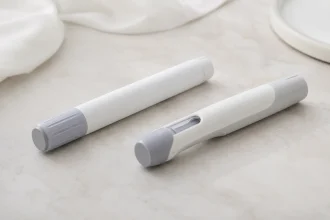
Compounded semaglutide is a custom-prepared version of semaglutide — the same active pharmaceutical ingredient found in brand-name Ozempic, Wegovy, and Rybelsus — made by a state-licensed or FDA-registered compounding pharmacy rather than by Novo Nordisk. Pharmacies prepare it based on an individual prescription from a licensed healthcare provider, typically as a sterile injectable solution dispensed in vials with syringes, or as sublingual drops for non-injection delivery.
The active ingredient should be semaglutide base — the exact form used in FDA-approved Ozempic and Wegovy. Some compounders have used salt formulations like semaglutide sodium or semaglutide acetate, but the FDA has stated these are different active ingredients than what is used in the approved drugs, and has not identified a lawful basis for their use in compounding. This distinction matters enormously for both safety and legality — and we’ll cover how to verify which form your pharmacy uses later in this guide.
Compounded semaglutide is not FDA-approved. Pharmacies do not submit it for the FDA’s new drug approval process. Instead, compounding operates under specific legal pathways carved out in the Federal Food, Drug, and Cosmetic Act — pathways that have been narrowing rapidly throughout 2024-2026.
Is Compounded Semaglutide Still Legal in 2026?
The short answer for May 2026: Yes, compounded semaglutide remains legal through 503A patient-specific compounding pharmacies. The FDA’s April 30, 2026 proposed rule affects 503B outsourcing facilities, not state-licensed 503A pharmacies that prepare medications based on individual prescriptions.
To understand what changed and what didn’t, you need to know how this market evolved:
- 2022: FDA added semaglutide and tirzepatide to the drug shortage list. This opened a legal pathway under Section 503A and 503B for compounding pharmacies to prepare these medications at scale.
- December 19, 2024: FDA issued declaratory order resolving the tirzepatide shortage. 503A enforcement discretion ended February 18, 2025; 503B outsourcing facilities followed March 19, 2025.
- February 2025: FDA removed semaglutide from the shortage list.
- April 30, 2026: FDA proposed excluding semaglutide, tirzepatide, and liraglutide from the 503B Bulks List, effectively closing the second legal pathway for 503B outsourcing facilities.
The April 2026 proposal is documented in Federal Register notice 91 Fed. Reg. 23431, with comments accepted through June 29, 2026. The FDA’s reasoning, as stated by Commissioner Marty Makary:
“When FDA-approved drugs are available, outsourcing facilities cannot lawfully compound using bulk drug substances unless there is a clear clinical need. This action reflects our responsibility to protect patients and preserve the integrity of the drug approval process.”
Dr. Marty Makary, FDA Commissioner — April 30, 2026
Critical nuance: the proposal targets 503B outsourcing facilities — large-scale operations that compound at industrial volume. It does not affect 503A pharmacies that prepare medications for individual patients with valid prescriptions. The 503A pathway is independent of FDA shortage status and operates under different statutory authority.
There’s one notable exception: liraglutide remains on the FDA shortage list as of May 2026, meaning 503B facilities can still compound it under the shortage pathway despite its proposed exclusion from the bulks list. Tirzepatide is in a tighter legal position than semaglutide. The tirzepatide shortage was resolved on December 19, 2024 by FDA declaratory order. 503A enforcement discretion for tirzepatide ended February 18, 2025, and 503B outsourcing facilities followed March 19, 2025. Combined with tirzepatide never appearing on the 503B Bulks List, this leaves only narrow patient-specific medical necessity exceptions for compounded tirzepatide in 2026.
503A vs 503B Pharmacies — Why It Matters in 2026
If you’re choosing a compounded GLP-1 provider, the most important question to ask is: “Is the pharmacy 503A or 503B?” After April 30, 2026, this single distinction determines whether they can legally continue operating.
- 503A pharmacies are state-licensed traditional compounding pharmacies. They prepare medications based on individual prescriptions from licensed prescribers for specific patients. They are regulated by state pharmacy boards and operate under Section 503A of the Federal Food, Drug, and Cosmetic Act. They are not FDA-registered as outsourcing facilities. 503A compounding of semaglutide remains legal in May 2026 as a patient-specific preparation, independent of shortage status.
- 503B outsourcing facilities are FDA-registered facilities permitted to compound at large scale without individual patient prescriptions. They operate under stricter standards (annual FDA inspections, cGMP-like requirements). After the FDA’s April 2026 proposal, 503B facilities can no longer compound semaglutide, tirzepatide, or liraglutide from bulk drug substances unless those drugs are on the shortage list at the time of compounding.
This is the central paradox of the 2026 landscape: 503B facilities, which have higher regulatory standards and FDA inspections, are now restricted from compounding GLP-1s. Meanwhile, 503A pharmacies — which face less federal oversight but operate per individual prescription — can continue. The FDA’s reasoning is that 503A patient-specific compounding is fundamentally different from 503B mass production, even when the underlying medication is identical.
What this means in practice: most reputable telehealth platforms have already shifted entirely to 503A pharmacy networks. The providers that built their business model around 503B outsourcing facilities have either pivoted or exited the market entirely — as we saw with Hims & Hers in April 2026.
The Hims Exit and Industry Shakeup
April 2026 saw the largest single shift in the compounded GLP-1 industry to date: Hims & Hers exited the compounded semaglutide business entirely, pivoting to become an authorized Novo Nordisk distributor selling brand-name Wegovy at $149/month.
The trigger was a Novo Nordisk lawsuit filed February 9, 2026 in the District of Delaware, alleging Hims infringed US Patent 8,129,343 through marketing and sale of compounded semaglutide. Novo Nordisk has been aggressive: as of early 2026, the company has filed approximately 132 federal complaints across 40 states against compounders and telehealth marketers, with courts already granting 44 permanent injunctions.
Not every compounding pharmacy has folded under pressure. On January 14, 2026, Strive Compounding Pharmacy filed a federal antitrust lawsuit against both Eli Lilly and Novo Nordisk in the US District Court for the Western District of Texas, alleging coordinated effort to suppress competition in the compounded GLP-1 market.
“For us, this is more than just a business dispute; it’s a fight for the right of every patient to have access to the medicine their doctor prescribes, at a price that isn’t dictated by a monopoly. Fair competition is an essential part not only of this industry, but the entire economy.”
Nate Hill, Co-Founder and CEO, Strive Compounding Pharmacy
The Strive lawsuit and the FDA’s bulks list proposal sit on opposite sides of an unresolved fight. The FDA’s June 29, 2026 comment deadline means the rule isn’t final yet — and even after finalization, court challenges are likely. For patients, the practical implication is simple: access through 503A pathways is intact for now, but the regulatory environment remains volatile.
Compounded vs Brand: The Real Differences
The active ingredient in compounded semaglutide should be identical to brand-name Wegovy and Ozempic — semaglutide base. When properly compounded by a legitimate 503A pharmacy using pharmaceutical-grade API from an FDA-registered manufacturer, the molecule itself is chemically the same.
However, several practical differences matter:
- FDA approval status: Brand-name Wegovy and Ozempic are FDA-approved finished pharmaceutical products. Compounded semaglutide is not. This means no FDA review of the specific compounded preparation’s safety, efficacy, or quality.
- Quality control variance: Compounded preparations don’t undergo the same standardized testing required for FDA-approved products. Quality depends heavily on the individual pharmacy’s standards. Reputable 503A pharmacies follow USP <795> (non-sterile compounding) and USP <797> (sterile compounding) standards, and many obtain Pharmacy Compounding Accreditation Board (PCAB) accreditation.
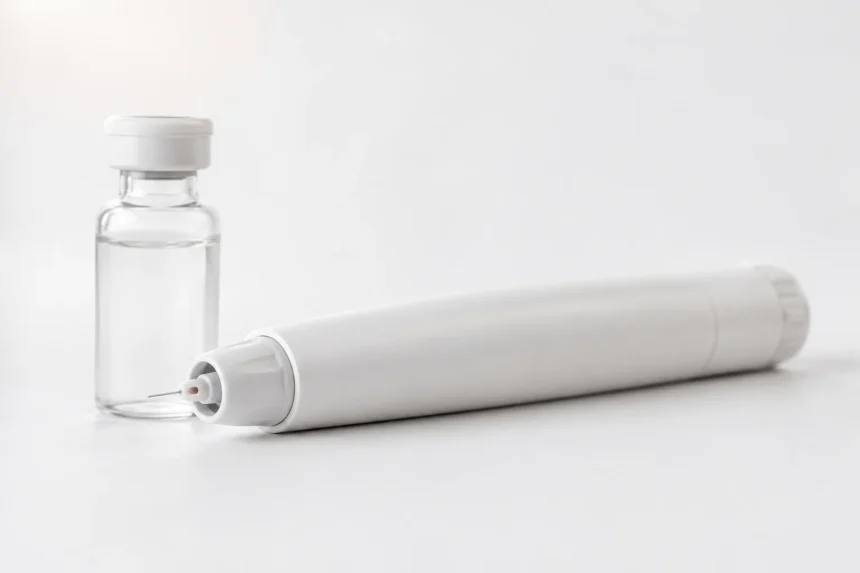
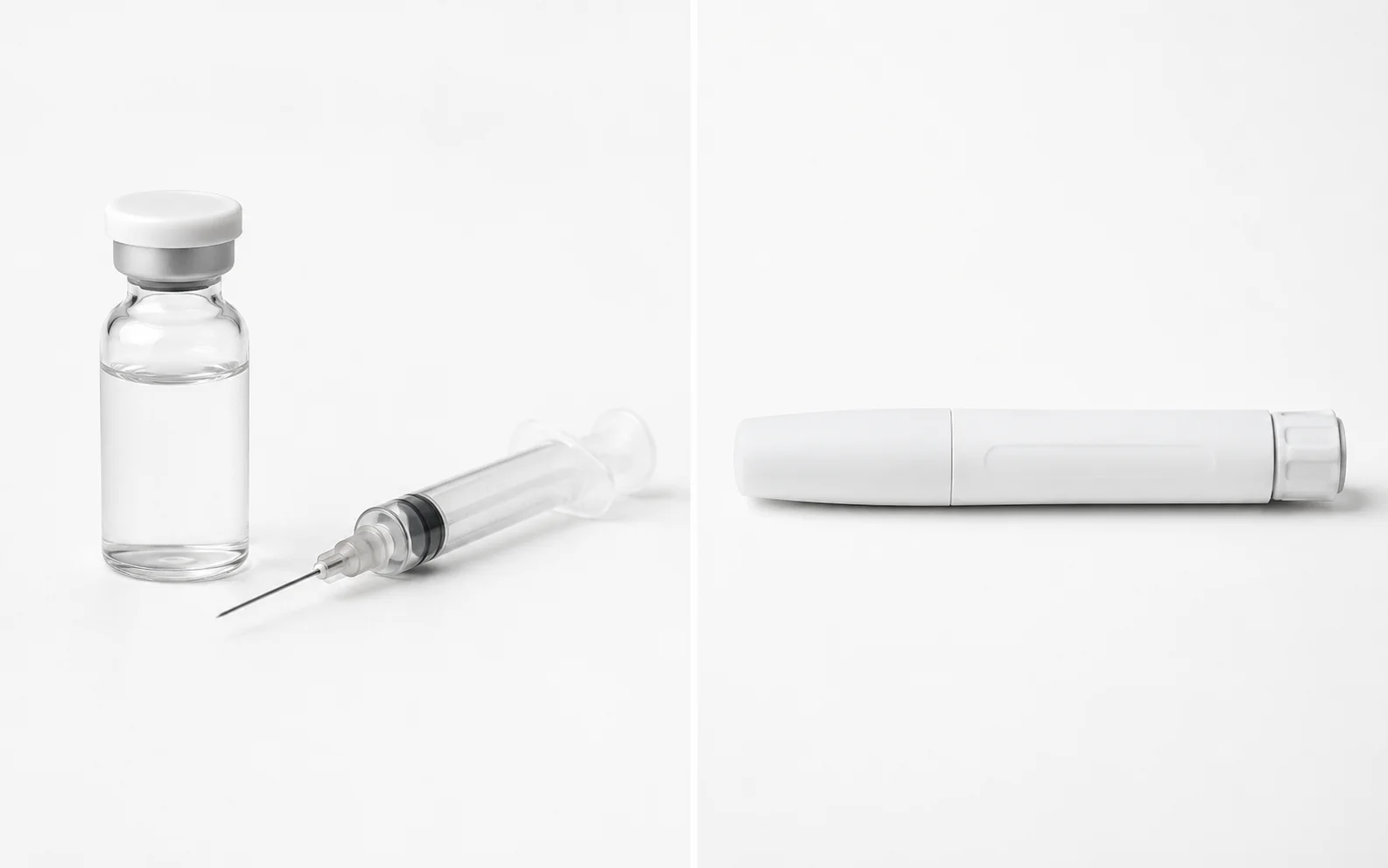
- Delivery format: Brand-name semaglutide ships in prefilled, multi-dose injection pens. Most compounded versions ship as vials with separate syringes, requiring you to draw your own dose. Some providers offer prefilled syringes as a middle ground.
- Dosing flexibility: Compounded preparations can be customized to non-standard doses — a 0.375mg intermediate dose between standard 0.25mg and 0.5mg, for example. Brand pens are limited to manufacturer-set increments.
- Excipients and additives: Some compounders combine semaglutide with B12 (cyanocobalamin) or other additives. The clinical rationale is mixed — some patients report better tolerance, but rigorous evidence for added compounds is limited.
- Insurance coverage: Compounded semaglutide is virtually never covered by insurance. Brand-name Wegovy and Ozempic have variable coverage depending on plan, diagnosis (diabetes vs weight management), and prior authorization requirements.
What about clinical effectiveness? No head-to-head clinical trials compare compounded vs brand semaglutide. The expectation — based on identical active ingredient — is that effects should be clinically similar. Anecdotal patient reports across telehealth platforms suggest comparable weight loss outcomes, though the absence of rigorous controlled data means this remains an inference rather than a proven equivalence.
How Much Does Compounded Semaglutide Cost in 2026?
Compounded semaglutide pricing in 2026 ranges from $99 to $499/month depending on provider, dose, and what’s bundled in the price. The wide range reflects different business models — some providers charge medication-only with separate fees for consultation and labs, while others bundle everything into a single monthly price.
Here’s the realistic 2026 pricing landscape across major telehealth providers (verify current prices at each provider’s site as pricing changes frequently):
- Trimi Health: $99-$125/month (starting tier; bundles visits)
- Sesame + third-party pharmacy: ~$129-$229/month (DIY route, cheapest if you handle sourcing)
- Ro Body: $149/month base tier
- Henry Meds: $149/month all-in
- Noom: $149/month medication tier (separate from program membership)
- Found: $159/month base
- GobyMeds: $169/month starting (higher doses up to $499/month)
- MEDVi: $179 first month, $299/month ongoing
- ShedRx: $199/month base, up to $299 at higher doses
- TrimRx: $199-$399/month depending on dose
- InjectCo: $249/month all-inclusive
- Direct Meds: $147/month first-month promo (regular $297/month), includes telemed visit, supplies, and 1-2 day shipping
For comparison, brand-name semaglutide retails for approximately:
- Wegovy: $1,349/month list price (cash pay)
- Ozempic: $968/month list price (cash pay; widely covered for type 2 diabetes)
- Wegovy oral pill (via Hims/Ro): $149/month — competitive with compounded
- Zepbound (LillyDirect direct-to-consumer): $299-$449/month
The cost gap between compounded and brand-name semaglutide remains substantial — typically 70-90% savings — though the introduction of Novo Nordisk’s oral Wegovy at $149/month has narrowed the price advantage at lower doses.
A critical point on dosing economics: many compounded providers charge the same flat monthly price regardless of dose, while some increase pricing as you titrate up. Brand-name Wegovy maintains the same price across all doses. Before committing to a provider, ask specifically how pricing changes as you reach your maintenance dose — the $149/month starter rate could double or triple by month 6.
💊 Looking for a Lower-Cost Compounded Option?
For cash-pay patients, compounded semaglutide is a lower-cost compounded option through a clinician-supervised telehealth model. Direct Meds offers Summer 2026 promotional pricing:
- Compounded Semaglutide: $147 first month ($150 OFF regular $297)
- Clinician-supervised dosing and titration support
- 503B compounding pharmacy network — patient-specific prescriptions
- LegitScript-certified telemedicine compliance
- USP <795> and USP <797> sterile compounding standards
- Available in 48 states (excludes MS and LA)
Compounded semaglutide contains semaglutide, but the compounded product itself is not an FDA-approved finished product and is not reviewed by the FDA for safety, effectiveness or quality. Whether it is appropriate for you is a decision for you and your clinician.
─────────────────────────────────────────────────────────
How to Get Compounded Semaglutide Safely
The compounded GLP-1 market has attracted both legitimate operators following federal standards and bad actors selling unregulated or counterfeit products. With over 600 adverse event reports tied to compounded semaglutide by July 2025, and the FDA issuing approximately 50 warning letters to compounders and telehealth distributors during 2025, vetting your provider matters.
Use this checklist when evaluating a compounded GLP-1 provider:
- Verify a real medical evaluation occurs. A legitimate provider requires a thorough intake form review by a licensed healthcare provider before prescription approval. Any site selling semaglutide without prescription evaluation is operating illegally — that’s a hard red flag, not a shortcut.
- Confirm the pharmacy is 503A (not unlicensed). Ask explicitly: “What’s the name of the pharmacy filling my prescription, and what state are they licensed in?” Then verify that pharmacy on the state board of pharmacy website. Legitimate 503A pharmacies are state-licensed and traceable.
- Look for LegitScript certification. LegitScript is the telemedicine industry’s most recognized compliance authority, independently verifying telehealth providers’ compliance with US healthcare regulations. Certified providers carry the LegitScript seal — verify the certification on legitscript.com.
- Ask about PCAB accreditation and USP standards. PCAB-accredited 503A pharmacies meet higher sterile compounding standards. Compliance with USP <795> (non-sterile) and USP <797> (sterile) is the floor; PCAB accreditation is the gold standard.
- Verify the form of semaglutide used. Reputable pharmacies use semaglutide base — the same form in FDA-approved Wegovy and Ozempic. If a provider can’t clearly answer whether they’re using semaglutide base or a salt form (sodium, acetate), avoid them. The FDA has stated salt forms have no lawful basis for use in compounding.
- Demand transparent all-in pricing. The advertised monthly price should include medication, provider consultation, syringes/supplies, and shipping. Hidden fees for consultations, refills, or shipping can add 10-30% to your real cost. Compare bundled prices, not just headline medication rates.
- Check shipping protocols. Compounded semaglutide requires temperature-controlled shipping. Legitimate providers use insulated packaging with ice packs and expedited (1-2 day) carriers like FedEx or UPS. Slow shipping or no temperature controls indicate potential quality compromise.
- Verify state availability. Some states restrict telehealth prescription of weight-loss medications. Mississippi and Louisiana currently prohibit telehealth prescribing of weight-management drugs. Make sure your provider serves your state.
Among current providers, Direct Meds satisfies these criteria cleanly: 503A pharmacy network, LegitScript-certified, USP <795>/<797> compliance, transparent pricing including telemed visit, and 1-2 day temperature-controlled shipping. Trimi Health, Ro Body, and Henry Meds are also commonly recommended 503A-based options at lower price points.
For a deeper dive on pharmacy verification, see our companion article: How to Verify a Legit Compounding Pharmacy.
Dosing and Administration
Compounded semaglutide dosing typically follows the same titration protocol as brand-name Wegovy, gradually increasing the dose over weeks to minimize gastrointestinal side effects. A common protocol:
- Weeks 1-4: 0.25 mg once weekly subcutaneous injection
- Weeks 5-8: 0.5 mg weekly
- Weeks 9-12: 1.0 mg weekly
- Weeks 13-16: 1.7 mg weekly
- Week 17 onward: 2.4 mg weekly (maintenance dose for chronic weight management)
Your individual prescriber will tailor the protocol to your tolerance and goals. Some patients pause titration at a lower dose if weight loss is satisfactory and side effects are minimal. Others may add antiemetic medications like ondansetron (Zofran) during the early titration weeks to manage nausea — a practice some compounding pharmacies (including Direct Meds) include in their standard protocol.
Administration is via subcutaneous injection into the abdomen, thigh, or upper arm. Rotate injection sites each week to minimize tissue irritation. Insulin-sized needles (typically 29-31 gauge, 4-6mm length) make injections nearly painless — most patients report the procedure being less uncomfortable than a fingerstick blood glucose check.
For full dosing details and injection technique, see: Semaglutide Dosage Chart and Titration Schedule.
Side Effects — What Patients Actually Report
The side effect profile of properly compounded semaglutide (using semaglutide base from a 503A pharmacy following USP standards) should mirror brand-name Wegovy and Ozempic, since the active ingredient is chemically identical. The most common side effects reported across both compounded and brand patient populations:
- Gastrointestinal: Nausea (most common, typically peaks during titration), vomiting, constipation, diarrhea, abdominal pain — usually most pronounced in the first 4-8 weeks
- Appetite suppression effects: Early satiety, reduced food cravings, “food noise” reduction
- Hair changes: Some patients report increased hair shedding, typically linked to rapid weight loss rather than the medication itself
- Energy and mood: Fatigue, occasional mood changes, sleep changes
- Facial changes: “Ozempic face” — facial volume loss from rapid weight reduction (cosmetic, not a direct medication effect)
- Muscle loss: Potential for lean mass reduction without adequate protein intake and resistance training
- Rare serious effects: Pancreatitis, gallbladder issues, severe nausea requiring discontinuation
Compounded-specific risks center on quality control rather than the active ingredient itself. When a pharmacy uses non-pharmaceutical-grade API, contaminated raw materials, salt forms instead of base, or inadequate sterile compounding, patients may experience adverse events that wouldn’t occur with FDA-approved product. The 600+ adverse event reports tied to compounded semaglutide reflect both expected GLP-1 side effects and quality-related issues.
Black box warnings apply to all semaglutide products, compounded or brand-name: Do not use if you or your family have a history of medullary thyroid carcinoma (MTC) or Multiple Endocrine Neoplasia syndrome type 2 (MEN 2). Discuss personal and family medical history thoroughly with your prescriber.
For detailed side effect management strategies, see: GLP-1 Side Effects: Complete Survival Guide.
What Happens If Your Compounded Provider Shuts Down
The April 2026 FDA proposal creates real uncertainty about long-term compounded GLP-1 availability. While 503A pathway access remains intact, individual providers may exit the market for various reasons — lawsuits, regulatory pressure, business model shifts (as with Hims), or finalization of the bulks list rule expanding to broader restrictions.
If your current compounded provider shuts down or discontinues GLP-1 services, you have several paths forward:
- Switch to another 503A-based provider. Multiple platforms operate through 503A pharmacy networks: Direct Meds, Trimi, Ro Body, Henry Meds, ShedRx, TrimRx, InjectCo. Confirm 503A pharmacy partnership before signing up.
- Transition to brand-name Wegovy. Cash-pay through Novo Nordisk’s direct programs (NovoCare) offers Wegovy starting at $499/month for some patients. The Wegovy oral pill at $149/month through authorized distributors like Hims is the closest cash-pay alternative to compounded pricing.
- Try Wegovy or Zepbound through your insurance. Many commercial plans cover these for diagnosed obesity (BMI ≥30) or overweight with comorbidities (BMI ≥27 plus high blood pressure, type 2 diabetes, etc.). Prior authorization required.
- Consider LillyDirect for Zepbound. Eli Lilly’s direct-to-consumer program offers Zepbound at $299-$449/month — competitive with mid-tier compounded options if you tolerate tirzepatide.
- Apply for patient assistance programs. Both Novo Nordisk and Eli Lilly offer income-qualified patient assistance for brand-name GLP-1s. Eligibility requirements are strict but worth checking.
If you’re rebuilding access from scratch, don’t expect to maintain the same low monthly cost. The 70-90% discount enabled by compounding was a temporary regulatory artifact of the shortage era. Brand-name pricing through cash-pay programs (NovoCare for Wegovy, LillyDirect for Zepbound) represents the new pricing floor for FDA-approved GLP-1s outside of insurance.
Frequently Asked Questions
Is compounded semaglutide FDA-approved?
No. Compounded medications are prepared by pharmacies under federal compounding authority (Section 503A or 503B of the FD&C Act), not submitted for the FDA’s new drug approval process. The active ingredient (semaglutide base) is the same as in FDA-approved Wegovy and Ozempic, but the specific compounded preparation has not been FDA-reviewed.
Is compounded semaglutide as effective as Ozempic or Wegovy?
When properly compounded using semaglutide base, the active ingredient is chemically identical to brand-name products. The mechanism of action, weight loss outcomes, and side effect profile should be clinically equivalent. However, no head-to-head clinical trials have compared compounded vs brand-name semaglutide directly.
Can I switch from Wegovy to compounded semaglutide?
Yes, with a new prescription from a licensed provider. Most telehealth platforms accept patients transitioning from brand-name to compounded at the same dose. Inform your new prescriber of your current dose to maintain continuity. Note that the delivery format changes — compounded ships in vials with syringes rather than prefilled pens.
Will insurance cover compounded semaglutide?
Almost never. Insurance plans generally don’t cover compounded medications that have an FDA-approved alternative. Some HSAs and FSAs allow compounded semaglutide as eligible expenses if prescribed for a documented medical condition — verify with your benefits administrator.
Is compounded semaglutide safe?
Safety depends on the pharmacy. Compounded semaglutide from a PCAB-accredited 503A pharmacy using pharmaceutical-grade semaglutide base, following USP <797> sterile compounding standards, and dispensed under a valid prescription with proper medical oversight is reasonably comparable in safety to brand-name semaglutide. Compounded products from unregulated sources, those using salt forms, or those using non-pharmaceutical-grade API carry substantially higher risk.
What’s the difference between semaglutide and semaglutide acetate?
Semaglutide base is the form used in all FDA-approved products (Ozempic, Wegovy, Rybelsus). Semaglutide acetate and semaglutide sodium are salt formulations — different active ingredients chemically. The FDA has stated salt forms have no lawful basis for use in compounding and have not been shown to be safe and effective. Verify your pharmacy uses semaglutide base.
Will the FDA ban compounded semaglutide entirely?
The April 2026 FDA proposed rule targets 503B outsourcing facilities, not 503A patient-specific compounding. Even if finalized, 503A pharmacies retain authority to compound semaglutide for individual patients under valid prescriptions. A complete ban would require new federal legislation or different FDA action — neither has been proposed.
How long does compounded semaglutide take to ship?
Reputable providers ship via overnight or 1-2 day FedEx/UPS with temperature-controlled packaging once prescription is approved. From first online consultation to receipt of medication typically takes 3-7 days for first orders. Refills usually ship within 24-48 hours of refill request through the patient portal.
Can I get compounded tirzepatide too?
Yes — most providers that offer compounded semaglutide also offer compounded tirzepatide. Tirzepatide pricing typically runs $279-$499/month, higher than semaglutide because tirzepatide is a more complex molecule (dual GIP/GLP-1 receptor agonist) and the API costs more.
What if I’m in Mississippi or Louisiana?
Mississippi and Louisiana currently restrict telehealth prescribing of weight-management medications. Most major telehealth GLP-1 providers (including Direct Meds, Ro, Henry Meds) cannot serve these states. Patients in these states need in-person consultations with state-licensed prescribers, or may travel to other states for evaluation.
The Bottom Line for May 2026
Compounded semaglutide remains a legal and accessible option through 503A patient-specific compounding pharmacies as of May 2026. The FDA’s April 30 proposed rule targets 503B outsourcing facilities, not the 503A pathway that powers most current telehealth providers. Final FDA action awaits the June 29 comment deadline and likely court challenges beyond.
If you’re currently on compounded semaglutide, your access is stable for the foreseeable future as long as you’re with a 503A-based provider. If you’re considering starting, the safety calculus comes down to provider selection: PCAB accreditation, LegitScript certification, transparent 503A pharmacy partnership, semaglutide base (not salts), USP <797> compliance, and temperature-controlled shipping are the markers that separate legitimate compounding from risky operators.
For most patients, the practical decision in 2026 isn’t whether compounded semaglutide is legal — it is, through 503A — but which provider offers the right balance of price, quality, and reliability for your needs. With brand-name pricing through cash-pay programs creeping down (oral Wegovy at $149/month is a notable shift) and compounded pricing holding stable at $99-299/month, the calculus is becoming more nuanced than it was in the shortage era.
Considering a Compounded Option?
For cash-pay patients pursuing semaglutide, Direct Meds offers compounded semaglutide through a clinician-supervised telehealth model, with Summer 2026 promotional pricing:
- $150 OFF first month compounded semaglutide injection ($147 vs regular $297)
- Licensed clinician reviews eligibility and oversees dosing and titration
- 503B compounding pharmacy network — patient-specific prescriptions
- LegitScript-certified telemedicine compliance
- USP <795> and USP <797> sterile compounding standards
- Telemed evaluation included (typically $99 value), 1-2 day FedEx/UPS shipping
- Available in 48 states (excludes MS and LA)
180,000+ patients have used Direct Meds; current Trustpilot rating 4.8. Compounded semaglutide contains semaglutide, but the compounded product itself is not an FDA-approved finished product and is not reviewed by the FDA for safety, effectiveness or quality. Whether it is appropriate for you is a decision for you and your clinician.
Affiliate disclosure: allcheminfo.com receives commission when readers start treatment through Direct Meds. Recommendation based on their 503B pharmacy partnership, LegitScript certification, and clinician-supervised model — not commission rate.