- What Direct Meds Is and How It Works
- Pricing — and the Cash-Pay Model
- What You’re Actually Buying — the Compounding Caveat
- The FDA Warning Letter, Explained
- The Reputation Split — Trustpilot vs the BBB
- Frequently Asked Questions
- Is Direct Meds legitimate?
- How much does Direct Meds cost?
- Is compounded semaglutide from Direct Meds the same as Ozempic or Wegovy?
- Does Direct Meds take insurance?
- What was the FDA warning letter about?
- The Verdict — Who Direct Meds Is For
Affiliate disclosure: This article contains affiliate links. allcheminfo.com earns a commission if you start treatment through Direct Meds, at no extra cost to you. That relationship is exactly why this review is written to be useful rather than flattering — a recommendation is only worth something if the caveats are on the table. This article is informational and is not medical advice.
Direct Meds is one of the more heavily advertised names in the compounded-GLP-1 telehealth market — the kind of platform whose ads for low-priced semaglutide turn up on social feeds. This review looks past the ad copy. It covers what Direct Meds actually is, what it costs, what you are buying when you buy compounded semaglutide, a 2025 FDA warning letter the company received, a notably divided customer reputation, and — the part that matters most — who the platform is a reasonable fit for and who should look elsewhere.
What Direct Meds Is and How It Works
Direct Meds is a direct-to-consumer telehealth platform that sells compounded versions of the two leading GLP-1 weight-loss drugs: semaglutide, the active ingredient in Ozempic and Wegovy, and tirzepatide, the active ingredient in Mounjaro and Zepbound. It is a cash-pay service — it does not bill insurance — aimed at people who either lack GLP-1 coverage or want to skip the insurance process entirely.
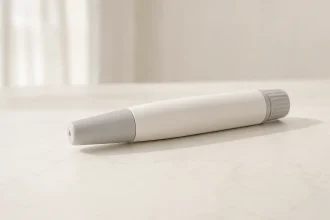
The model is straightforward. You complete an online medical intake; a licensed provider reviews your history and, if you are an appropriate candidate, issues a prescription; the medication is prepared by a compounding pharmacy and shipped to you, typically within one to two days. Eligibility generally follows the usual GLP-1 criteria — broadly, a BMI of 30 or higher, or 27 or higher with a weight-related health condition — and the reviewing provider can decline to prescribe. Direct Meds offers the medication in two forms — a subcutaneous injection and a sublingual, under-the-tongue version — and includes nurse support as part of the service. The compounding is done by 503A pharmacies, which prepare patient-specific prescriptions.
The company holds LegitScript certification, an independent accreditation that reviews online pharmacies and telehealth platforms for licensed-pharmacy partnerships, prescription practices and regulatory compliance. That certification is a meaningful baseline signal — it distinguishes Direct Meds from the genuinely illegitimate operators in this space — but, as the sections below make clear, it is not the same as FDA approval of the product, and it does not mean the company is without problems.
Pricing — and the Cash-Pay Model
Direct Meds’ pricing model is one of its genuine strengths, and also a moving target.
The strength: it is a flat, all-inclusive cash price. There is no membership fee, no separate consultation charge, no shipping fee — the medication, the provider review and delivery are bundled into one number. That is a real advantage over telehealth platforms that layer a monthly membership on top of the drug cost, where the advertised “low” price is only part of what you actually pay.
The moving target is the number itself. Direct Meds advertises promotional pricing — at the time of writing, around $147 for a first month of compounded semaglutide, against a regular price in the range of roughly $297. Independent reviews over recent months have quoted regular semaglutide pricing variously between about $197 and $297 a month, with compounded tirzepatide higher, around $397. Promotional offers and program structures in this market change frequently, so the only reliable figure is the one on the Direct Meds site on the day you look. Treat any price quoted in a review — including this one — as a ballpark, and confirm before enrolling. For the full range of GLP-1 payment options, brand and compounded, see our GLP-1 cost guide.
One useful detail: compounded GLP-1 medications are generally eligible for payment with HSA or FSA funds, which lowers the effective cost for anyone with access to those accounts. And because the service is month-to-month with no contract, you are not locked in — though, as the reputation section below explains, paying close attention to the subscription and cancellation terms matters.
What You’re Actually Buying — the Compounding Caveat
This is the most important section of the review, and it is not specific to Direct Meds — it applies to every compounded-GLP-1 telehealth platform.
Compounded semaglutide and tirzepatide are not FDA-approved. The active ingredients are the same molecules found in the brand-name drugs, but a compounded product is not the same thing as an FDA-approved one. FDA-approved drugs like Wegovy and Zepbound are reviewed by the FDA for safety, effectiveness and manufacturing quality before they reach patients. Compounded versions are not: the FDA does not evaluate them as finished products, and their quality depends on the individual compounding pharmacy rather than on FDA review.
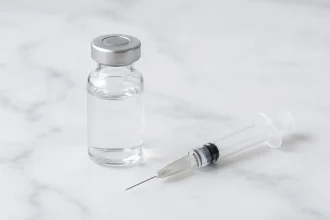
There are specific issues the FDA has flagged across the compounded-GLP-1 industry. Some compounders have used salt forms of semaglutide — semaglutide sodium or semaglutide acetate — rather than the semaglutide base used in the approved drugs; the FDA has said the safety and effectiveness of these salt forms are not established. The agency has also documented hundreds of adverse-event reports tied to compounded semaglutide and tirzepatide, a number of them involving dosing errors — patients or providers miscalculating doses, sometimes leading to hospitalization. Because compounded injectables are often supplied in vials for the patient to draw up, the dosing-error risk is real and worth taking seriously.
One choice within the platform deserves a specific note. Direct Meds offers its compounded semaglutide as both an injection and a sublingual drop, and the two are not equivalent. Subcutaneous injection is the route with well-established absorption — it is how every FDA-approved semaglutide injection is delivered. Sublingual semaglutide, by contrast, rests on weak evidence: semaglutide is a large peptide that the body absorbs poorly through the lining of the mouth, and the sublingual route is not an established delivery method. If you use Direct Meds, the injectable is the better-grounded choice; our comparison of sublingual and injectable compounded semaglutide covers why.
A prospective long-term patient should also know that the regulatory ground under compounded GLP-1 is shifting. The drug shortages that gave compounding its widest legal opening ended in 2025, and through 2026 the FDA has been moving to narrow how compounded semaglutide and tirzepatide can be supplied. Patient-specific compounding by licensed 503A pharmacies — the kind Direct Meds uses — remains legal for now, but the compounded route is under active regulatory pressure and may not stay as available, or as inexpensive, as it is today.
None of this means compounded semaglutide cannot work or is inherently unsafe — it has been used by a great many cash-paying patients as an accessible route to treatment. But it does mean compounded GLP-1 is a different proposition from an FDA-approved prescription, with a different risk profile, and that difference should be clearly understood before you buy. Our guide to verifying a compounding pharmacy covers the checks worth doing on any provider in this category.
The FDA Warning Letter, Explained
In September 2025, the FDA issued a warning letter to directmeds.com, Inc. — the company behind Direct Meds. It is a matter of public record on the FDA’s website, and any honest review has to address it.
What the letter was about: the FDA reviewed the Direct Meds website in August 2025 and objected to specific marketing language. The site described its compounded products as being made by licensed compounding pharmacies using “the same active ingredients” as the brand-name drugs. The FDA’s position is that this kind of claim is false or misleading, because it implies the compounded products are the same as an FDA-approved product when they are not — which makes the products “misbranded” under federal law. The FDA directed the company to stop using the cited language.
What the letter was not: it is important to be precise here. The warning letter concerned advertising and labeling claims — marketing language — not a finding that Direct Meds’ medication was contaminated, counterfeit or dangerous. It was also not unique to Direct Meds. The September 9, 2025 letter was one of more than 55 the FDA issued that same day to sellers of compounded GLP-1 drugs, all citing the same pattern — claims that the compounded products were the “same” as the brand-name drugs. That action was part of a broader federal crackdown on misleading drug advertising, and the FDA sent a further wave of around 30 such letters to telehealth companies in February 2026. The letter reflects an industry-wide regulatory posture, not a problem unique to this one company.
How to weigh it: the warning letter is genuine, and it is not nothing — a federal regulator formally told this company its marketing was misleading. It is a fair reason for caution and a reason to read the company’s claims critically. At the same time, it is a marketing-claims action rather than a product-safety finding, and it sits within a broad sweep of the whole sector. A prospective patient should factor it in as one real negative — not treat it as either disqualifying or trivial.
The Reputation Split — Trustpilot vs the BBB
Direct Meds has one of the more genuinely contradictory online reputations you will encounter, and the contradiction itself is informative.
On Trustpilot, the company does well — a high rating, commonly cited in the range of 4.6 to 4.8 out of 5 across thousands of reviews, with the large majority being five-star. Reviewers frequently praise specific customer-service and nursing staff by name and describe real weight-loss results. Direct Meds is also notably responsive on the platform, replying to the large majority of negative reviews.
On the Better Business Bureau, the picture is the opposite. Direct Meds is not BBB-accredited and carries an F rating, with a customer review average around 1 out of 5 and roughly a hundred complaints on file. The complaints cluster around a consistent set of operational problems: billing and subscription disputes, missing or delayed shipments, and — a particular concern for a temperature-sensitive medication — products arriving warm or without adequate cold packaging. There are also complaints about customers receiving the wrong medication.
How should a prospective customer read a split this stark? Two things are true at once. First, the platforms collect different things: people tend to leave Trustpilot reviews when prompted after an ordinary experience, and tend to go to the BBB specifically to file a complaint, so the BBB skews negative by its nature. Second — and this is the part not to wave away — an F rating with around a hundred complaints is a real signal of operational weakness, particularly in billing and shipping. The honest reading is that Direct Meds is not a scam, and many customers have straightforward, satisfactory experiences, but it is a high-volume operation with genuine, recurring problems in fulfillment and billing. If you use it, document your communications, watch your subscription terms closely, and inspect shipments on arrival.
💊 Looking for a Lower-Cost Compounded Option?
For cash-pay patients, compounded semaglutide is a lower-cost compounded option through a clinician-supervised telehealth model. Direct Meds offers Summer 2026 promotional pricing:
- Compounded Semaglutide: $147 first month ($150 OFF regular $297)
- Clinician-supervised dosing and titration support
- 503B compounding pharmacy network — patient-specific prescriptions
- LegitScript-certified telemedicine compliance
- USP <795> and USP <797> sterile compounding standards
- Available in 48 states (excludes MS and LA)
Compounded semaglutide contains semaglutide, but the compounded product itself is not an FDA-approved finished product and is not reviewed by the FDA for safety, effectiveness or quality. Whether it is appropriate for you is a decision for you and your clinician.
Frequently Asked Questions
Is Direct Meds legitimate?
Direct Meds is a real, LegitScript-certified telehealth platform using licensed providers and 503A compounding pharmacies — it is not a scam. But “legitimate” and “problem-free” are different things. The product it sells is not FDA-approved, the company received an FDA warning letter in 2025 over its marketing language, and it has a poor Better Business Bureau record. It is a real business with real weaknesses.
How much does Direct Meds cost?
Direct Meds uses a flat, all-inclusive cash price with no membership or hidden fees. Promotional pricing is advertised around $147 for the first month of compounded semaglutide; the regular price has been quoted in the range of roughly $197 to $297 a month, with compounded tirzepatide higher, around $397. Pricing in this market changes often, so confirm the current figure on the Direct Meds site.
Is compounded semaglutide from Direct Meds the same as Ozempic or Wegovy?
It uses the same active ingredient, semaglutide, but it is not the same product. Ozempic and Wegovy are FDA-approved and FDA-reviewed for safety, effectiveness and quality; compounded semaglutide is not. Treating the two as equivalent is precisely the implication the FDA’s 2025 warning letter to Direct Meds addressed.
Does Direct Meds take insurance?
No. Direct Meds is a cash-pay service and does not bill insurance. You can, however, generally use HSA or FSA funds to pay for a prescribed compounded GLP-1, which lowers the effective cost.
What was the FDA warning letter about?
In September 2025 the FDA cited Direct Meds for website marketing language that implied its compounded products were “the same” as FDA-approved drugs. It was a marketing-claims action — not a finding that the medication was unsafe or contaminated — and it was part of an industry-wide FDA sweep that named many compounded-GLP-1 companies for the same pattern of advertising.
The Verdict — Who Direct Meds Is For
Direct Meds is a real, established, LegitScript-certified telehealth platform with a genuinely simple cash-pay pricing model and strong day-to-day customer sentiment on Trustpilot. It also sells a product that is not FDA-approved, carries a 2025 FDA warning letter over its marketing, and has a poor BBB record built on billing and shipping complaints. Both of those descriptions are accurate, and the right decision depends on which side of the trade-off your situation falls on.
Direct Meds is a reasonable fit if you cannot afford brand-name GLP-1s and have no insurance coverage for them; you understand and accept that compounded medication is not FDA-approved and carries a different risk profile; you are comfortable with a cash-pay telehealth model; and you will pay attention to billing and subscription terms and check shipments on arrival.
It is a poor fit if you have insurance coverage, manufacturer self-pay pricing or the Medicare bridge that brings brand-name GLP-1s within reach — in which case an FDA-approved drug is the better choice; if you want the certainty of an FDA-reviewed product; or if you are not prepared to actively manage a subscription and watch for billing issues.
The honest bottom line: compounded-GLP-1 telehealth is a legitimate but imperfect corner of the market, and Direct Meds is a middle-of-the-pack operator within it — not the best-run, and not a scam. If the cash-pay compounded route genuinely fits your situation, it is a usable option, provided you go in with the caveats in this review clearly in mind. If an FDA-approved drug is realistically within your reach, take that instead. For more on choosing a GLP-1 telehealth provider safely, see our guide to buying GLP-1s online.
Considering a Compounded Option?
For cash-pay patients pursuing semaglutide, Direct Meds offers compounded semaglutide through a clinician-supervised telehealth model, with Summer 2026 promotional pricing:
- $150 OFF first month compounded semaglutide injection ($147 vs regular $297)
- Licensed clinician reviews eligibility and oversees dosing and titration
- 503B compounding pharmacy network — patient-specific prescriptions
- LegitScript-certified telemedicine compliance
- USP <795> and USP <797> sterile compounding standards
- Telemed evaluation included (typically $99 value), 1-2 day FedEx/UPS shipping
- Available in 48 states (excludes MS and LA)
180,000+ patients have used Direct Meds; current Trustpilot rating 4.8. Compounded semaglutide contains semaglutide, but the compounded product itself is not an FDA-approved finished product and is not reviewed by the FDA for safety, effectiveness or quality. Whether it is appropriate for you is a decision for you and your clinician.
Affiliate disclosure: allcheminfo.com receives commission when readers start treatment through Direct Meds. Recommendation based on their 503B pharmacy partnership, LegitScript certification, and clinician-supervised model — not commission rate.
This article is general information, not medical advice. Pricing, programs and a company’s regulatory and reputation record reflect the situation as of May 2026 and can change; confirm current details directly before making decisions.